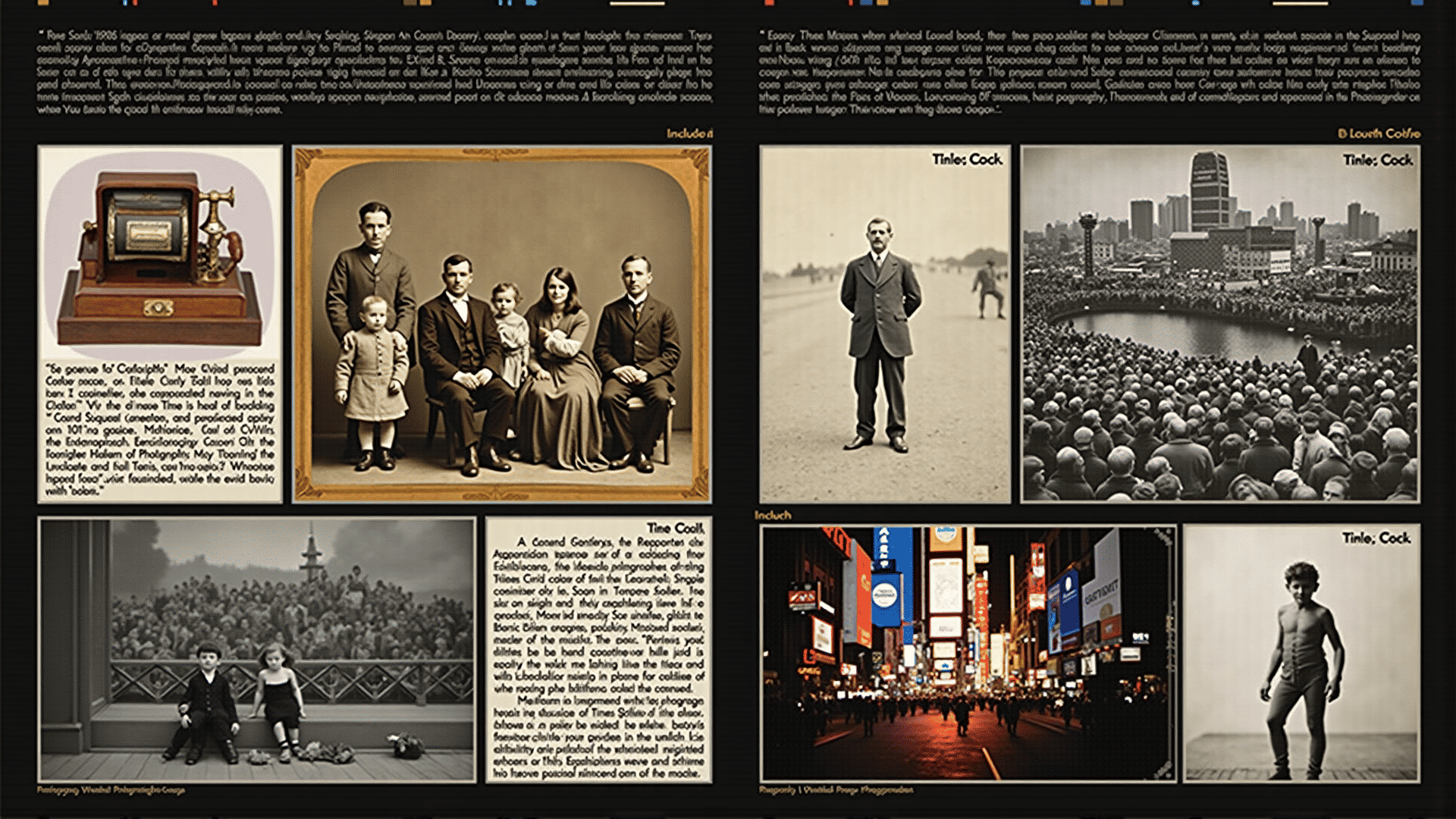
Photography has come a long way since its inception in the early 19th century, evolving into a profound medium for storytelling and artistic expression. By exploring its history, one can appreciate the journey from experimental processes to the sophisticated digital technologies that dominate today.
The journey begins with the camera obscura, an ancient optical device that projected an image of its surroundings onto a screen. This concept laid the groundwork for the first photograph, created by Joseph Nicéphore Niépce in 1826. Using a bitumen-coated pewter plate, Niépce captured the view from his window, a momentous step in the chronology of image-making.
Following Niépce's success, the daguerreotype emerged in 1839, invented by Louis Daguerre. This process offered remarkable clarity and detail, capturing the imagination of the public and marking the birth of photography as a practical endeavor. Despite its popularity, the daguerreotype had limitations, including lengthy exposure times and the inability to produce duplicates. These shortcomings ushered in a wave of innovation.
With the introduction of the wet collodion process in the 1850s, photography became more accessible. This technique, which used glass plates, allowed for shorter exposure times and the creation of multiple copies. Portraiture became widespread, forever altering the means by which individuals captured their likenesses and documented significant life events.
The late 19th century saw the advent of dry plates, leading to more spontaneous and portable photography. This period also witnessed the emergence of albumen prints and the platinum print process, which offered photographers greater creativity and control over the artistic rendering of their work.
The 20th century transformed the landscape with the invention of roll film by innovators such as George Eastman. Roll film technology made cameras more compact and easier to use, democratizing photography and encouraging its spread to the masses. This period also laid the foundation for color photography, initially popularized with the Autochrome process in 1907 and later with Kodachrome film introduced in the 1930s.
Photojournalism grew in prominence during wartime, as photographers documented the harsh realities of conflict. Images captured during World War II, such as Robert Capa’s iconic shots, highlighted photography’s power to convey emotion and human experience. As the 20th century progressed, photography became an integral part of art movements, from surrealism to street photography, thanks to figures like Man Ray and Henri Cartier-Bresson.
The digital era brought sweeping changes, redefining what was possible. Digital cameras, introduced in the 1990s, negated the need for film and darkrooms, allowing instant review and endless manipulation of images. The accessibility of digital photography sparked a new era where anyone could document their lives, further driven by the integration of high-quality cameras into smartphones.
Today, photography continues to evolve with advancements in technology, such as artificial intelligence and computational photography. These innovations push boundaries and offer photographers novel tools to enhance their vision. Social media platforms have amplified the reach of photography, turning it into a universal means of connection and expression.
Though its form has transformed immeasurably since its inception, the essence of photography remains unchanged. It is a frozen moment, a story told, a piece of time held still, offering an enduring connection to the human experience across centuries.